
November 21, 2025
Quality Over Quantity: The Partnership Paradox
Would you rather have twenty new clients or just three? The strategic math might surprise you.


Leadership Consulting · Business Strategy · Commercial Optimization
iGaming's demand expertise. As former executives with a network of field specialists, we guide you through every challenge.
Strategic growth planning, partnership support, and market expansion for iGaming operators
Strategic growth planning and market expansion guidance for iGaming operators
Comprehensive operational guidance and process improvement to enhance gaming platform performance
Vendor selection, procurement planning, and commercial analysis for gaming technology and services
Helping you identify, attract, and connect with top industry talent through a focused and confidential search process
Leverage our extensive network of partners and service providers to find the right solutions for your gaming business
General strategy consultation and executive guidance for gaming operations
Analysis and trends from the forefront of iGaming strategy
Would you rather have twenty new clients or just three? The strategic math might surprise you.
How predictive modeling is changing the way operators engage with high-value players.
Key metrics to evaluate when choosing platform providers and game aggregators.
We've been executives ourselves, understanding your challenges firsthand
Whatever the task, we have the field expert on hand
From strategy to execution across all iGaming verticals
Schedule a 30-minute call to understand what you're looking for
You run a gaming platform. Would you rather have twenty new clients or just three?
If you immediately said "twenty," you might want to reconsider.
While this article approaches from the perspective of a platform provider, these core principles transcend across the entire B2B gaming ecosystem—whether you're a payment processor, game aggregator, compliance solution, or CRM provider. The strategic math remains the same: the wrong partners don't just fail to generate revenue; they actively consume resources and derail your focus.
The proposition is tempting: twenty new partnerships mean twenty setup fees, expanded market presence, and impressive growth metrics to present to stakeholders. On paper, it's a win. In practice, it's often where sustainable growth goes to die.
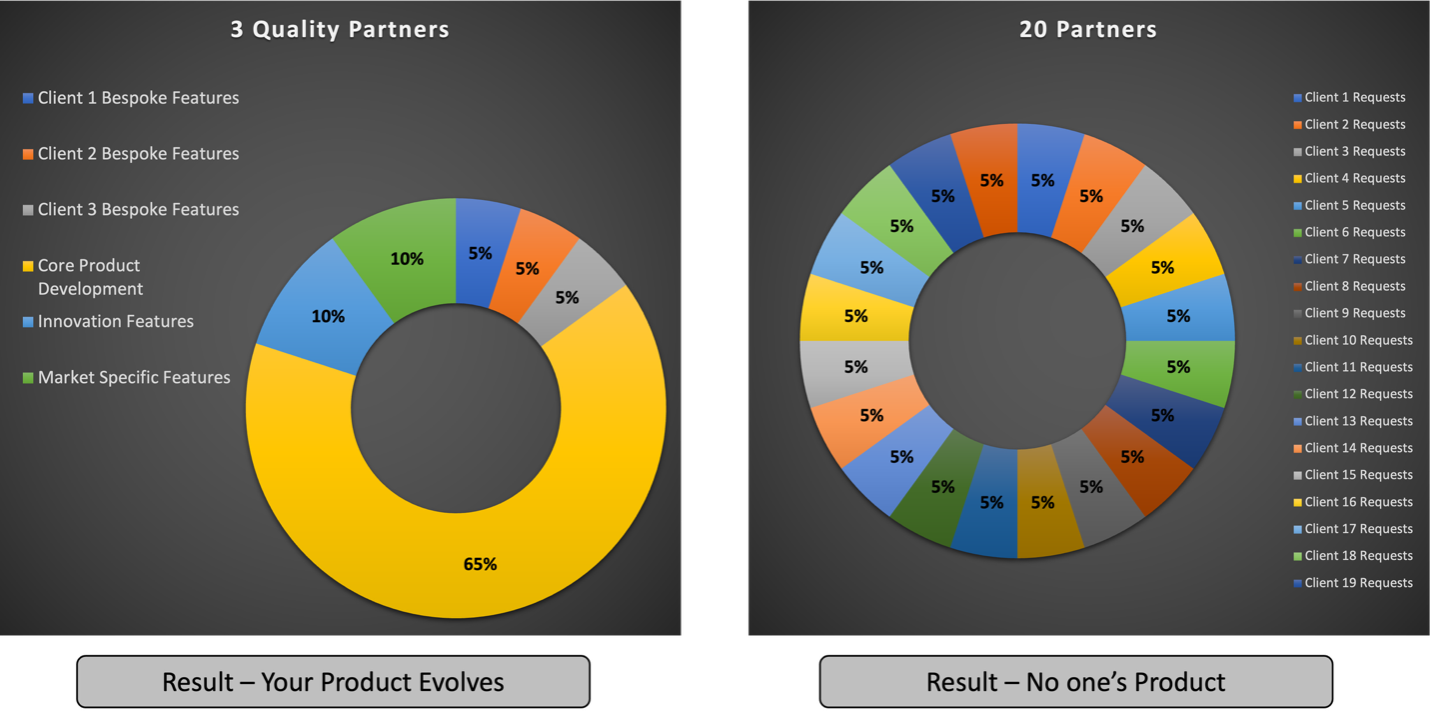
Before signing that twentieth contract, ask yourself the critical questions that separate visionary growth from reckless expansion:
Here's the uncomfortable truth: sufficient funding doesn't equal success. We've seen operators with seven-figure war chests flame out spectacularly within six months because they fundamentally misunderstood their market, their competition, or basic unit economics.
This is why the sales process needs rigorous qualification filters, not just credit checks:
Beyond the initial setup revenue, will these partners still be operating at month six? Month twelve? The iGaming graveyard is filled with brands that looked promising in pitch decks but lacked the market understanding, capital reserves, or operational discipline to survive their first regulatory hurdle or their second month of underwhelming CPA performance.
And here's the question nobody wants to face: do you really want to spend your time chasing minimum monthly fees through courts and collection agencies when they run out of money? Because that's where inadequate qualification leads—not to partnerships, but to legal disputes over unpaid invoices.
Twenty partners mean twenty different stakeholder calls, twenty competing priorities, and twenty voices demanding your development roadmap bends to their vision. Your account managers become firefighters. Your product team becomes a feature factory. Your strategy becomes whatever the loudest partner demanded last Tuesday.
Here's where complexity compounds. Twenty partners rarely mean twenty identical operations—they mean twenty different markets, each with its own technical and commercial requirements:
This is where the real damage occurs. With twenty partners pulling in twenty directions, what happens to your product vision? Your differentiation? Your competitive edge?
You stop building what the market needs and start building what keeps partners from churning. Innovation dies in committee. Your roadmap becomes a wishlist negotiation. Features ship half-finished because resources are spread across too many initiatives. Your platform becomes a Swiss Army knife that does everything adequately and nothing exceptionally.
Three to five deeply aligned partners will outperform twenty mismatched ones every time. Here's why:
Before expanding your partnership portfolio, get ruthlessly honest:
The right answer might be turning down eighteen opportunities to fully commit to two.
In an industry obsessed with growth metrics and market expansion, the courage to say "no" might be your greatest competitive advantage. Twenty partnerships don't make you a platform leader—they make you a vendor struggling to keep everyone minimally satisfied.
Choose partners who want to build with you, not just license from you. Choose markets where you can genuinely win, not just participate. Choose focus over fragmentation.
Your future self and your shareholders will thank you.
Interested in partnership strategy that prioritizes sustainable growth? Let's talk about building partnerships that compound value rather than complexity.